September 30, 2026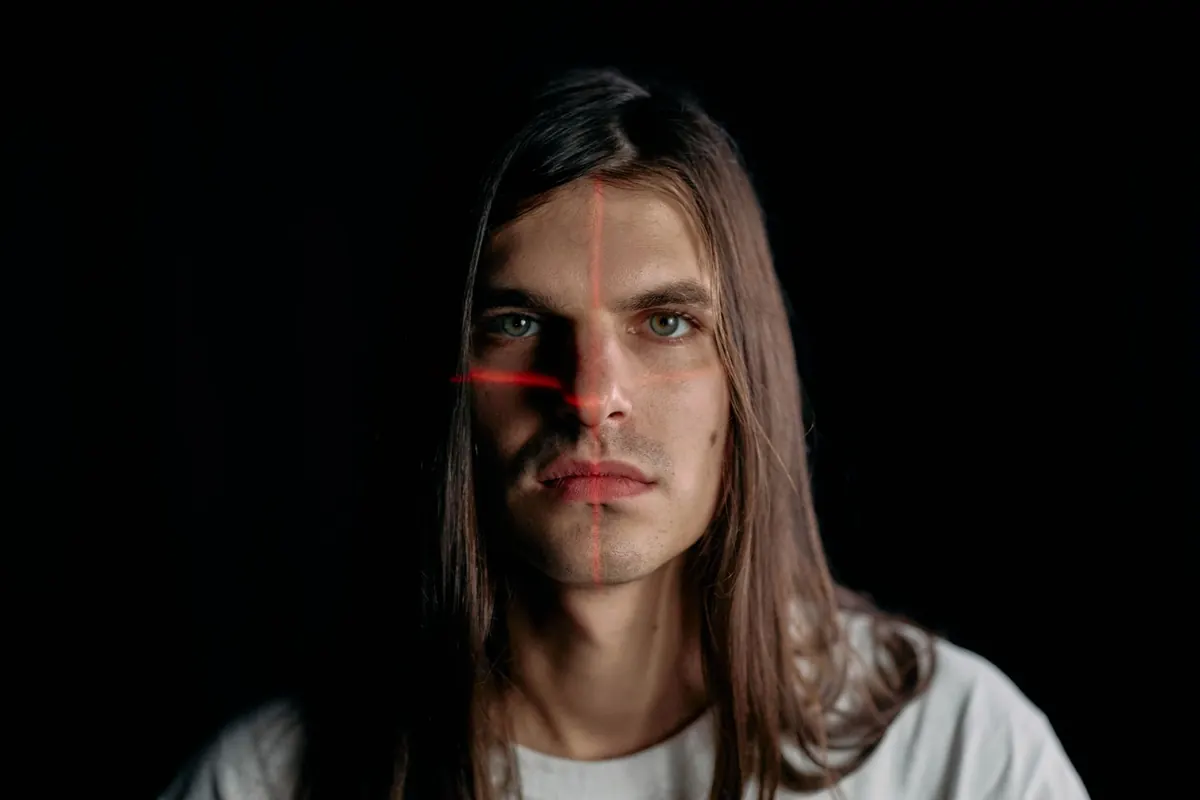
Facial recognition rarely fails evenly. A system that looks impressive in a demo can produce wildly different error rates once it meets real faces, real lighting, and real consequences. The goal is not to declare a tool unbiased. It is to find where it breaks, understand who bears the cost, and reduce that harm before deployment and after.
Start with the error that matters most
Before touching data, write down the decision the system supports. A one-to-one verification check at a building entrance has a different risk profile from a one-to-many search across a crowd. In verification, a false non-match may lock out an employee. In identification, a false match may send an innocent person into an investigation. Both are failures, but they distribute harm differently.
Ask: who is affected when the system is wrong? What happens next? Is there a human check? If the answer is vague, the fairness work will be vague too.
Build a test set that reflects your actual population
Most bias hides in the gap between benchmark data and the real world. A test set should be assembled with consent, purpose, and care. It should include:
- A range of skin tones, from very light to very deep, with labels that are consistent and reviewed.
- Race and ethnicity, with labels chosen carefully and, where possible, self-reported.
- Different lighting conditions: daylight, shadow, backlight, nighttime, and mixed indoor light.
- Poses and expressions: angles, motion blur, glasses, masks, hats, and hair that covers the face.
- Age ranges, gender expressions, and disabilities that affect face or movement.
- Intersectional groups, because disparity often appears at the overlap of skin tone and gender, or age and lighting.
- Images captured with the same cameras, resolution, and compression your system will see.
If a group is missing, do not pretend the model is neutral. Record the gap as a limitation and decide whether deployment is acceptable.
Measure accuracy by group, not by average
An overall accuracy score can hide a system that works well for one group and poorly for another. Break results into at least two error types:
- False match rate: how often the system wrongly says two different faces are the same.
- False non-match rate: how often it fails to match the same person.
Also track precision, recall, and score distributions per group. For one-to-many searches, report the false positive identification rate at realistic gallery sizes. For verification, report the false accept and false reject rates at your chosen threshold.
Sample size matters. A group-level rate based on a handful of faces is noise, not evidence. Where data is thin, say so and widen your uncertainty. Compare error curves, not single points.
Interrogate thresholds and score calibration
Many disparities are threshold problems in disguise. A threshold turns a similarity score into a yes or no. Move it, and the balance between false matches and false non-matches changes—often unevenly across groups. Plot error rates across a range of thresholds. Look for the point where one group’s false match rate spikes while another’s stays flat.
If you find that, investigate why. The cause may be uneven training data, camera differences, or score calibration that does not travel across skin tones and lighting. Adjusting thresholds per group can reduce visible disparity, but it can also raise legal and ethical questions about separate treatment. Do not do it quietly. Get qualified legal and civil rights advice before making that choice.
Reduce bias at the source
Post-processing patches are tempting. They are also limited. The strongest fixes happen earlier.
- Improve representation. Collect or license data that reflects the people the system will serve. Pay attention to intersections, not just broad categories.
- Audit labels. Who decided a face was “dark skin” or “female”? Use clear protocols, multiple reviewers, and checks for inconsistency.
- Match capture conditions. If deployment uses low-resolution cameras at an angle, training and testing should include those conditions.
- Test preprocessing. Face alignment, cropping, and image enhancement can help one group and hurt another. Measure before and after.
- Choose models with disaggregated evidence. If a vendor cannot provide error rates by demographic group for a comparable population, treat that as a serious gap.
- Document trade-offs. A model that improves one group’s false non-match rate may worsen another’s false match rate. Make the trade-off explicit.
Deploy with guardrails and human review
Even a well-tested system drifts. Cameras get replaced. Populations change. A model update can alter behavior. Guardrails should be in place before launch:
- Use human review for high-stakes decisions. A match is a lead, not a verdict.
- Set confidence thresholds that trigger a second check rather than automatic action.
- Give people a way to appeal or correct a decision.
- Log every match, non-match, and override, with enough detail to audit later.
- Monitor error rates by group in production. If data cannot be collected ethically, monitor proxies carefully and document their limits.
- Run periodic red-team tests with fresh images and new conditions.
- Put fairness requirements into contracts: disaggregated reporting, audit rights, incident notification, and the ability to pause or remove the system.
If the use case affects policing, employment, housing, benefits, or access to essential services, seek legal and civil rights review before launch and after any major change.
Make fairness a maintenance habit
Bias testing is not a one-time report. Set a review schedule that matches your risk: after every model update, camera change, or new site; at least once a year for stable systems. Keep a short changelog of what you tested, what you found, and what you changed. Revisit the test set as your user population shifts. Train operators to recognize and report unusual failures. If error rates worsen for a group, pause the affected use and investigate rather than waiting for the next cycle.
The practical aim is not perfection. It is a system that is measured honestly, limited when necessary, and improved over time.
Photo: cottonbro studio / Pexels